
Have you ever found yourself growing impatient and making decisions without waiting on God’s timing? We’ve all been there. In this blog post, we will explore various examples from the Bible of individuals who failed to wait on God and the consequences they faced. By examining these stories, we can gain valuable insights into the importance of patience and trusting in God’s perfect timing. So, if you want to avoid the pitfalls of impatience and learn how to wait on God’s plan, keep reading!
Taking Matters Into Our Own Hands: Instances of Impatience in the Bible
Examples of Not Waiting on God in the Bible
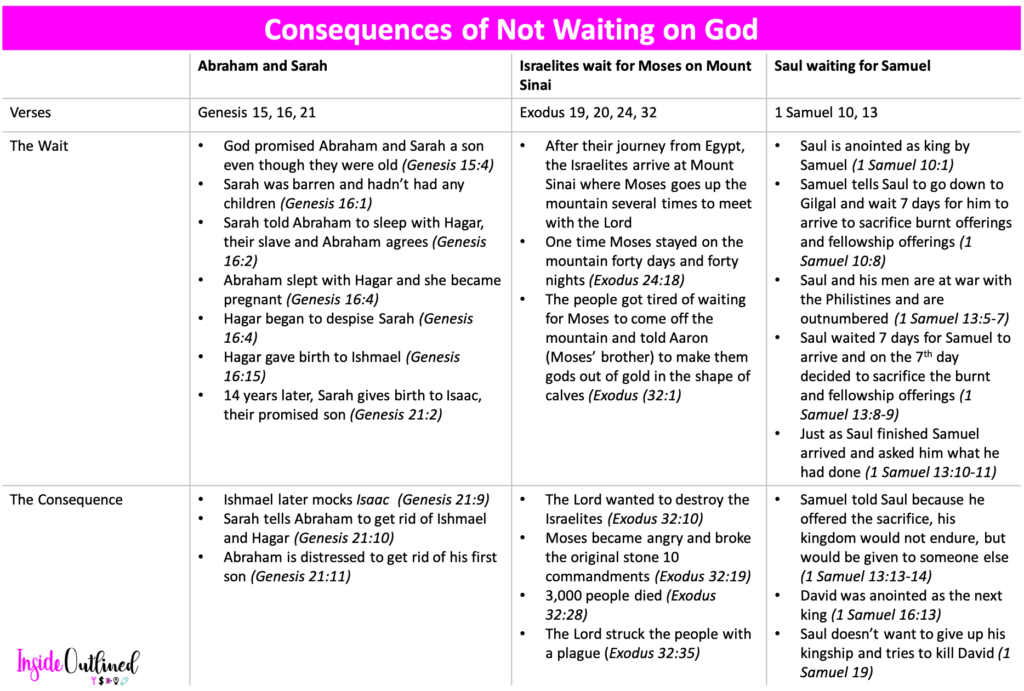
1. The Story of Sarah and Hagar (Genesis 16): In this story, Sarah, the wife of Abraham, was unable to conceive a child. Instead of waiting for God’s timing, Sarah took matters into her own hands and gave her maidservant, Hagar, to Abraham as a surrogate mother. This decision led to conflict and tension within their household and ultimately caused pain and suffering for all involved.
2. Saul’s Impatience with Samuel (1 Samuel 13): King Saul was commanded by Samuel, the prophet and judge, to wait for his arrival before offering sacrifices to God. However, when Samuel did not arrive at the appointed time, Saul took matters into his own hands and offered the sacrifices himself. This act of impatience and disobedience resulted in God rejecting Saul as king and choosing a new leader for Israel.
3. The Israelites’ Golden Calf (Exodus 32): While Moses was up on Mount Sinai receiving the Ten Commandments from God, the Israelites grew impatient and decided to create a golden calf to worship instead. They couldn’t wait for Moses to return and sought an immediate solution to their need for a physical representation of God. This act of idolatry angered God and brought consequences upon the Israelites.
4. David’s Affair with Bathsheba (2 Samuel 11): King David, who was known for his faithfulness to God, fell into temptation when he saw Bathsheba, the wife of Uriah the Hittite. Instead of waiting on God’s plan or seeking His guidance, David acted impulsively and committed adultery with Bathsheba. This act led to a series of tragic events, including the murder of Uriah and the death of their child.
5. Peter’s Denial of Jesus (Matthew 26): Despite Peter’s declaration of loyalty and commitment to Jesus, when faced with the pressure and fear of being associated with Jesus during His trial, Peter denied knowing Him three times. Peter’s impatience and lack of trust in God’s plan caused him to act in a way that went against his professed faith.
These examples from the Bible teach us the consequences of not waiting on God’s timing, not seeking His guidance, and instead relying on our own understanding and desires. They serve as reminders that patience, trust, and obedience are essential in our relationship with God.
Who didn’t wait for God in the Bible?
There are several instances in the Bible where individuals did not wait for God. One notable example is the story of Abraham and Sarah in Genesis 16. Sarah, who was barren, suggested to Abraham that he have a child with her maidservant Hagar instead of waiting on God’s promise of a child. This decision resulted in conflict and complications within their family.
Another instance is found in Exodus 32 when the Israelites, led by Aaron, grew impatient waiting for Moses to return from Mount Sinai. They decided to create a golden calf and worship it as an idol, showing their lack of trust and impatience with God’s timing.
In the New Testament, we see the story of Peter, James, and John in the Garden of Gethsemane. Jesus asked them to stay and pray while He went to pray alone. However, they fell asleep instead of waiting and supporting Jesus during His crucial moment of prayer.
These examples highlight the consequences of not waiting for God’s timing and taking matters into our own hands. It serves as a reminder for us to trust in God’s plans and patiently wait for His guidance.
What happens when you don’t wait for God’s timing?
When you don’t wait for God’s timing, you may experience negative consequences and miss out on His best for your life. In the Bible, we see several examples of individuals who took matters into their own hands instead of waiting for God’s perfect timing.
One such example is the story of Abraham and Sarah. God had promised them a son, but as years went by without any sign of fulfillment, Sarah became impatient. She suggested that Abraham have a child with her maidservant, Hagar, in an attempt to bring about God’s promise. However, this decision only led to conflict and complications within their family.
Another example is found in the story of Saul, the first king of Israel. In 1 Samuel 13, Saul was instructed by the prophet Samuel to wait for him before engaging in battle against the Philistines. However, when Samuel did not arrive at the appointed time, Saul became anxious and offered sacrifices himself, a role reserved for the priests. As a result, Samuel rebuked Saul, saying, “You have done foolishly. You have not kept the command of the Lord your God” (1 Samuel 13:13).
These stories highlight the importance of waiting for God’s timing and following His instructions. When we rush ahead of God, we often make decisions based on our limited understanding and desires, rather than on His perfect plan for us. This can lead to unnecessary hardships, broken relationships, and missed opportunities.
Waiting on God’s timing requires trust, patience, and faith. It means acknowledging that God knows what is best for us and believing that His timing is perfect. As it says in Isaiah 40:31, “But they who wait for the Lord shall renew their strength; they shall mount up with wings like eagles; they shall run and not be weary; they shall walk and not faint.”
So, when we don’t wait for God’s timing, we risk stepping out of His will and facing the consequences of our impatience. It is important to seek His guidance, trust in His plans, and patiently wait for Him to fulfill His promises in our lives.
What not to do when waiting on God?
When waiting on God, there are certain things that we should avoid doing. Here are some “what not to do” points:
1. Don’t rush or become impatient: Waiting on God requires patience and trust in His timing. Trying to rush things or becoming impatient can lead to making hasty decisions that may not align with God’s plan.
2. Don’t rely solely on your own understanding: Proverbs 3:5-6 reminds us to trust in the Lord with all our hearts and not lean on our own understanding. When waiting on God, it’s important to seek His wisdom and guidance rather than solely relying on our own understanding.
3. Don’t neglect prayer and seeking God: Instead of being consumed by worry or frustration during the waiting period, it is crucial to stay connected to God through prayer and seeking Him. This allows us to align our hearts with His will and receive His peace and guidance.
4. Don’t compare your journey to others: Each person’s journey with God is unique, and comparing our waiting period to others can lead to discouragement and discontentment. Remember that God’s plans for each individual are different, and He knows what is best for us.
5. Don’t lose hope or give up: Waiting on God can be challenging, especially when the answer or breakthrough seems delayed. However, it’s important to hold onto hope and keep trusting in God’s faithfulness. Don’t give up on your faith or stop believing in His promises.
Remember, waiting on God is an opportunity for growth, deepening our faith, and developing patience. By avoiding these pitfalls and staying connected to Him, we can experience His perfect plan and timing in our lives.
What are the consequences of failing to wait on God?
Failing to wait on God can have several consequences according to the Bible. One of the main consequences is that we may miss out on God’s perfect plan and timing for our lives. When we rush ahead of God and make decisions without seeking His guidance or waiting for His timing, we may end up making choices that are not in line with His will.
Another consequence is that we may experience unnecessary stress, anxiety, and worry. When we try to take matters into our own hands instead of waiting for God to act, we often carry the burden and responsibility on our own shoulders. This can lead to feelings of overwhelm and exhaustion.
Furthermore, failing to wait on God can lead to spiritual stagnation. God often uses times of waiting to refine our character, strengthen our faith, and teach us important lessons. When we choose impatience over waiting on God, we miss out on these valuable opportunities for growth and maturation.
Additionally, failing to wait on God can result in missed blessings and opportunities. God has perfect timing and knows what is best for us. When we impatiently rush ahead, we may overlook or dismiss the blessings and opportunities God has prepared for us.
It is important to remember that waiting on God does not mean being passive or idle. It involves actively seeking His will, praying for guidance, and trusting in His faithfulness. By patiently waiting on God, we align ourselves with His plans and experience His best for our lives.
FAQs
What are some examples of individuals in the Bible who did not wait on God’s timing?
Some examples of individuals in the Bible who did not wait on God’s timing include Sarah and Abraham (Genesis 16:1-4), Saul (1 Samuel 13:8-14), and Moses (Exodus 2:11-15).
How did impatience lead to negative consequences for certain characters in the Bible?
Impatience led to negative consequences for certain characters in the Bible by causing them to act impulsively and make poor decisions that went against God’s will (Proverbs 19:2). This impatience often led to sinful behavior and ultimately resulted in negative outcomes or punishment from God. Examples include Moses striking the rock instead of speaking to it, resulting in him being prohibited from entering the Promised Land (Numbers 20:11-12), and Saul offering a burnt offering without waiting for Samuel, leading to the loss of his kingship (1 Samuel 13:8-14).
Can you provide instances where people took matters into their own hands instead of waiting for God’s guidance in the Bible?
Yes, there are instances in the Bible where people took matters into their own hands instead of waiting for God’s guidance. One example is when Abraham and Sarah decided to have a child through Sarah’s maidservant, Hagar, instead of waiting for God to fulfill His promise of giving them a child. Another example is when Moses took matters into his own hands and killed an Egyptian who was mistreating a Hebrew slave, rather than waiting for God’s guidance on how to deliver the Israelites from slavery.