
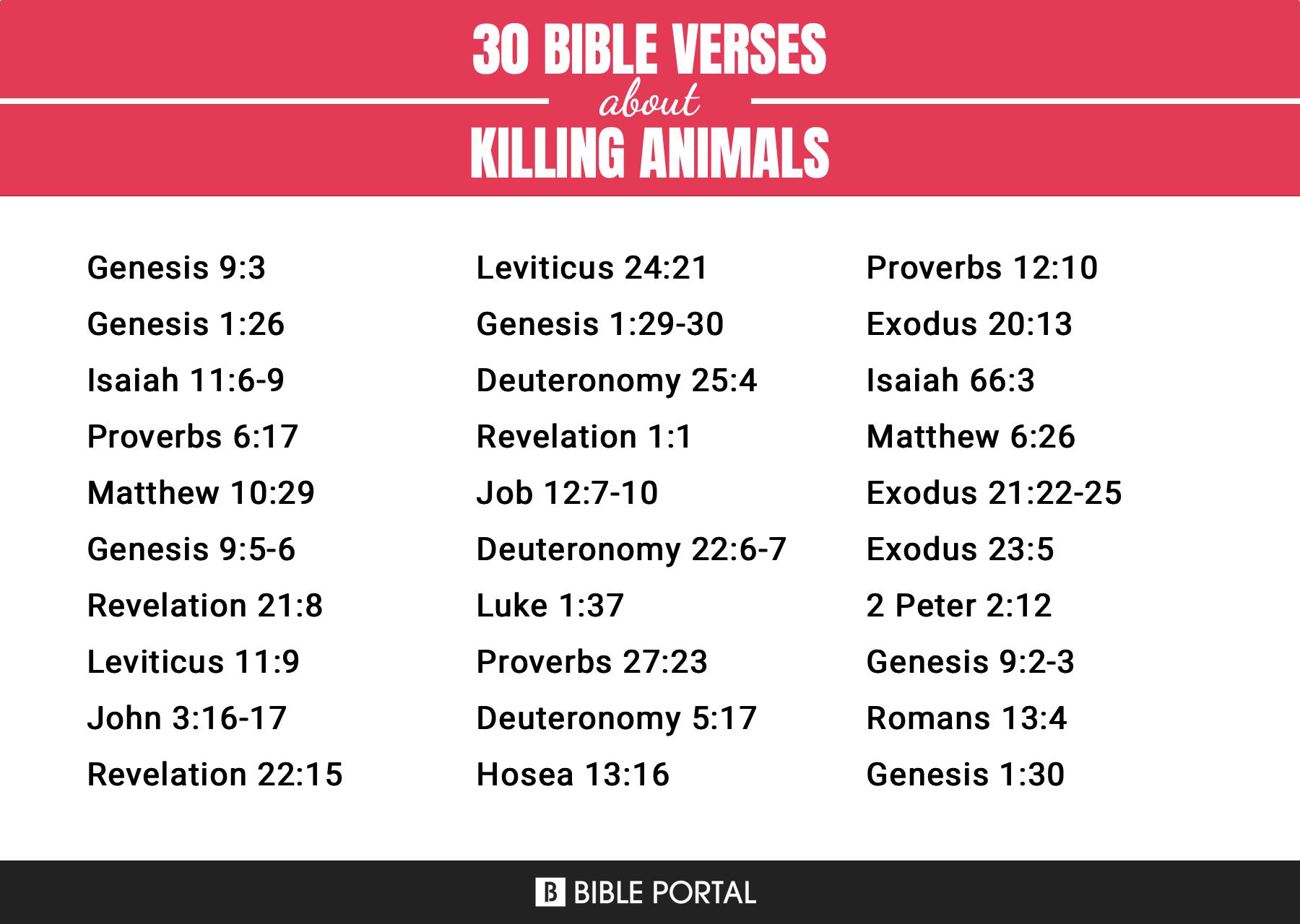
Have you ever wondered what the Bible has to say about killing animals? In a world where vegetarianism and animal rights are hot topics, it’s important to explore the teachings of the Bible on this subject. While many may assume that the Bible promotes the killing and consumption of animals, a closer look reveals a more nuanced perspective. This blog post will delve into the biblical passages that address the topic of killing animals, examining the ethical considerations and the potential benefits of understanding these teachings. Join us as we uncover what the Bible truly says about our relationship with animals.
The Biblical Perspective on Animal Slaughter: Examining Scripture’s Stance on Taking the Lives of Animals
The Bible addresses the topic of killing animals in various contexts, providing insights into God’s perspective on this matter. Let’s explore what the Bible says about killing animals.
In the Old Testament, animal sacrifices were an integral part of Israelite worship practices. The book of Leviticus outlines specific instructions for presenting offerings to God, including the sacrifice of animals. These sacrifices were primarily performed to atone for sins and express gratitude to God. However, it is important to note that these practices were specific to the Israelites and the covenant they had with God at that time.
Moreover, the Bible acknowledges that humans have been given dominion over the animals (Genesis 1:26). This dominion implies responsibility and stewardship rather than a license for cruelty or unnecessary killing. Proverbs 12:10 states, “Whoever is righteous has regard for the life of his beast, but the mercy of the wicked is cruel.” This verse emphasizes the importance of treating animals with kindness and compassion.
Additionally, the Bible contains passages that discourage unnecessary killing of animals. For instance, Proverbs 27:23 advises, “Know well the condition of your flocks, and give attention to your herds.” This verse encourages responsible care for livestock, emphasizing the need to maintain their well-being rather than engaging in reckless actions that could cause harm or death.
Furthermore, the biblical concept of Sabbath rest extends to animals as well. In Exodus 20:10, during the commandments, it is stated, “But the seventh day is a Sabbath to the LORD your God. On it, you shall not do any work, you, or your son, or your daughter, your male servant, or your female servant, or your livestock, or the sojourner who is within your gates.” This verse indicates that animals, like humans, should be granted a day of rest.
It is also worth mentioning that the Bible recounts instances where animals are used for sustenance and provision. In Genesis 9:3, after the flood, God blesses Noah and his descendants, saying, “Every moving thing that lives shall be food for you. And as I gave you the green plants, I give you everything.” This passage implies that the consumption of animals for nourishment is permissible, but it does not endorse wanton killing or cruelty towards animals.
In conclusion, the Bible acknowledges that animals have value and should be treated with kindness and respect. While animal sacrifices were prevalent in the Old Testament, they were specific to the Israelite worship practices. The Bible encourages responsible stewardship and discourages unnecessary killing of animals. It emphasizes the importance of treating animals with compassion, providing for their needs, and granting them rest.
Is it a sin to kill an animal?
According to the Bible, killing an animal is not considered a sin. In fact, God gave humans dominion over animals and allowed them to use animals for various purposes, including food and sacrifice. However, there are guidelines and regulations in place regarding the treatment of animals and the act of killing them.
In the Old Testament, animals were often sacrificed as an act of worship and obedience to God. This practice was a way for people to seek forgiveness for their sins and demonstrate their faith. The book of Leviticus outlines specific instructions for offering sacrifices and the proper handling of animals during these rituals.
Additionally, in the New Testament, Jesus’ death and resurrection are seen as the ultimate sacrifice, fulfilling the need for animal sacrifices. Christians believe that through Jesus’ sacrifice, they can receive forgiveness and salvation.
However, it’s important to note that the Bible also emphasizes the value of compassion and stewardship towards animals. Proverbs 12:10 states, “The righteous care for the needs of their animals, but the kindest acts of the wicked are cruel.” This verse highlights the importance of treating animals with kindness and not inflicting unnecessary harm upon them.
Overall, while killing animals for various purposes is not considered a sin in the Bible, it is essential to approach it with respect, responsibility, and compassion.
What does the Bible say about killing animals for meat?
The Bible does not explicitly condemn or prohibit the killing of animals for meat. In fact, in the Old Testament, there are various instances where God permits the consumption of meat. For example, in Leviticus 11, God provides guidelines for the Israelites regarding what animals are considered clean and unclean for food. Additionally, in Genesis 9:3, after the flood, God gives Noah permission to eat meat, stating, “Every moving thing that lives shall be food for you. And as I gave you the green plants, I give you everything.”
However, it is important to note that the Bible does emphasize the importance of treating animals with care and respect. Proverbs 12:10 states, “Whoever is righteous has regard for the life of his beast, but the mercy of the wicked is cruel.” This verse highlights the responsibility of humans to treat animals with kindness and compassion.
Furthermore, the New Testament encourages believers to consider the needs and convictions of others when it comes to matters of food. Romans 14:21 states, “It is better not to eat meat or drink wine or to do anything else that will cause your brother or sister to fall.” This passage reminds Christians to be mindful of their actions and to avoid causing harm or offense to others.
Overall, while the Bible does not explicitly address the morality of killing animals for meat, it emphasizes the importance of treating animals with kindness and considering the well-being of others in our dietary choices.
What does the Bible say about hurting animals?
The Bible teaches us to be responsible stewards of God’s creation, including animals. While there is no specific verse that directly addresses the topic of hurting animals, several passages highlight the importance of showing kindness and compassion towards them.
In Proverbs 12:10, it says, “The righteous care for the needs of their animals, but the kindest acts of the wicked are cruel.” This verse emphasizes the importance of treating animals with care and meeting their needs.
Furthermore, in Genesis 1:26, it states, “Then God said, ‘Let us make mankind in our image, in our likeness, so that they may rule over the fish in the sea and the birds in the sky, over the livestock and all the wild animals, and over all the creatures that move along the ground.’” This verse implies that humans have been given dominion over animals, which includes the responsibility to treat them with respect and not inflict unnecessary harm upon them.
Additionally, Jesus teaches compassion and mercy in Luke 12:6, where he says, “Aren’t five sparrows sold for two pennies? Yet not one of them is forgotten by God.” This verse highlights God’s care for even the smallest and seemingly insignificant creatures, reminding us to value and protect all forms of life.
Overall, while the Bible does not explicitly condemn hurting animals, it promotes kindness, compassion, and responsible stewardship towards them. As believers, we should strive to follow these principles and treat animals with love and care.
What does the Bible say about animal death?
The Bible mentions animal death in various contexts. One of the important themes in the Bible is the idea that God created all living creatures, including animals, and called them “good” (Genesis 1:25). However, after Adam and Eve’s disobedience, sin entered the world, resulting in the introduction of death and suffering for both humans and animals (Romans 5:12).
In Genesis 3:21, God made garments of skin for Adam and Eve to wear after they sinned. This implies that God had to kill an animal to provide clothing for them, indicating the first recorded animal death in the Bible.
Throughout the Old Testament, animal sacrifices were a significant part of Israel’s worship. These sacrifices involved the killing of animals as an atonement for sin and a means of seeking forgiveness from God. The shedding of blood was considered necessary for the forgiveness of sins (Leviticus 17:11).
In the New Testament, the death and resurrection of Jesus Christ are central to Christian beliefs. Jesus’ sacrifice on the cross is seen as the ultimate and final sacrifice, fulfilling the need for animal sacrifices. The book of Hebrews emphasizes that Jesus offered himself as the perfect sacrifice, once for all (Hebrews 10:10).
Additionally, the Bible speaks of a future restoration and renewal of all creation, including animals. In Romans 8:19-21, it states that creation eagerly awaits the revealing of the children of God, and that it will be liberated from its bondage to decay. This suggests that there will be a time when all creation, including animals, will experience redemption and freedom from suffering and death.
In summary, the Bible acknowledges animal death as a consequence of sin, includes animal sacrifices in the Old Testament as a means of seeking forgiveness, and points to Jesus’ sacrifice on the cross as the ultimate solution for sin and death. It also offers hope for a future restoration and renewal of all creation, including animals.
FAQs
Does the Bible condone the killing of animals for food?
Yes, the Bible does condone the killing of animals for food.
Are there specific guidelines in the Bible regarding the humane treatment of animals before they are killed?
Yes, the Bible does provide guidelines for the humane treatment of animals before they are killed. Proverbs 12:10 states that “The righteous care for the needs of their animals.” Additionally, Deuteronomy 25:4 instructs that animals should not be muzzled while working and should be allowed to eat from the crops they are harvesting. These verses highlight the importance of compassion and fair treatment towards animals in biblical teachings.
What examples can be found in the Bible where animals were killed for sacrifice or other religious purposes?
In the Bible, there are several examples where animals were killed for sacrifice or other religious purposes. Some notable instances include the sacrifice of lambs during the Passover (Exodus 12:6), the offering of bulls and goats for atonement (Leviticus 16:3-10), and the dedication of animals for consecration (Leviticus 8:14-17).