
Have you ever wondered what the Bible says about spreading the good news? In this blog post, we will explore the powerful verse from Matthew 28:19-20 that encourages believers to “Go, therefore, and make disciples of all nations.” Join us as we unpack the significance of this verse and discover how it can inspire and empower us to share the message of God’s love and salvation with others. Get ready to be inspired to go tell it on the mountain!
Discover the Powerful Message of ‘Go Tell It on the Mountain’ Bible Verse
Go Tell It on the Mountain is a renowned spiritual song that has its roots in African-American culture. The lyrics of this song are inspired by the biblical story of Jesus’ birth found in the book of Luke. One Bible verse that encapsulates the essence of this song is Luke 2:8-14:
“And there were shepherds living out in the fields nearby, keeping watch over their flocks at night. An angel of the Lord appeared to them, and the glory of the Lord shone around them, and they were terrified. But the angel said to them, ‘Do not be afraid. I bring you good news that will cause great joy for all the people. Today in the town of David a Savior has been born to you; he is the Messiah, the Lord. This will be a sign to you: You will find a baby wrapped in cloths and lying in a manger.’
Suddenly a great company of the heavenly host appeared with the angel, praising God and saying, ‘Glory to God in the highest heaven, and on earth peace to those on whom his favor rests.'”
This verse captures the momentous occasion when the shepherds received the joyful news of Jesus’ birth. The imagery of the shepherds in the fields, the appearance of the angel, and the subsequent heavenly choir praising God all contribute to the sense of awe and wonder surrounding this divine event.
The phrase “Do not be afraid” in this verse holds great significance as it reassures the shepherds of the angel’s message, emphasizing the transformative power of the news they are about to receive. It serves as a reminder that God’s plans often unfold in unexpected ways, bringing hope and salvation to all.
The announcement of the Savior’s birth in the town of David signifies the fulfillment of the long-awaited prophecy of the Messiah. The mention of the baby being wrapped in cloths and lying in a manger highlights the humble and modest circumstances of Jesus’ birth, underscoring his identification with the lowly and marginalized.
The appearance of the heavenly host praising God reflects the sheer magnitude of this momentous occasion. The angels’ proclamation of “Glory to God in the highest heaven, and on earth peace to those on whom his favor rests” signifies the profound impact that Jesus’ birth would have on the world. It heralds not only the arrival of the Savior but also the promise of peace and reconciliation that he brings to humanity.
The lyrics of “Go Tell It on the Mountain” encapsulate the spirit of this Bible verse. The song urges believers to spread the good news of Jesus’ birth, just as the shepherds did after receiving the angel’s message. It serves as a reminder to proclaim the joyous tidings of salvation and to share the love and peace that Christ offers to all.
In conclusion, Luke 2:8-14 captures the awe-inspiring moment when the shepherds received the news of Jesus’ birth. This verse emphasizes the transformative power of God’s message, the humble circumstances of Jesus’ birth, and the promise of peace and reconciliation that he brings. “Go Tell It on the Mountain” resonates with this verse, urging believers to spread the good news and share the love of Christ with others.
Where in the Bible does it say go and tell?
In the Bible, the phrase “go and tell” can be found in several verses. One notable example is in the New Testament, specifically in Matthew 28:19-20 (NIV):
“Therefore go and make disciples of all nations, baptizing them in the name of the Father and of the Son and of the Holy Spirit, and teaching them to obey everything I have commanded you. And surely I am with you always, to the very end of the age.”
In this passage, Jesus is commissioning his disciples to spread the message of the Gospel and make disciples of all nations. The phrase “go and make disciples” emphasizes the importance of actively sharing the teachings of Jesus with others.
Another instance of a similar command can be found in Mark 16:15 (NIV):
“He said to them, ‘Go into all the world and preach the gospel to all creation.'”
Here, Jesus instructs his followers to go out into the world and proclaim the good news of salvation to all people.
Note: The use of tags is not necessary in this text, as there are no specific keywords or phrases that need to be highlighted.
What is the mountain in Matthew 17?
In Matthew 17, the mountain referred to is known as the “Mount of Transfiguration.” This significant event is described in Matthew 17:1-9. Jesus took Peter, James, and John up a high mountain, and there He was transfigured before them. His face shone like the sun, and His clothes became as white as light. Then, Moses and Elijah appeared and talked with Jesus.
This event demonstrated Jesus’ divine nature and confirmed His authority as the Son of God. Peter, overwhelmed by the sight, suggested building three shelters for Jesus, Moses, and Elijah. However, a voice from heaven, identified as God the Father, declared, “This is my Son, whom I love; with him, I am well pleased. Listen to him!”
The Mount of Transfiguration serves as a pivotal moment in Jesus’ ministry, emphasizing His role as the fulfillment of the Law (represented by Moses) and the Prophets (represented by Elijah). It also provides a glimpse of the glory that believers will experience in the future. After this event, Jesus instructed the disciples not to tell anyone about what they had witnessed until after His resurrection.
Is Go Tell It on the Mountain a Negro spiritual?
Yes, “Go Tell It on the Mountain” is a Negro spiritual. The song originated within the African American community and has deep roots in African American religious and cultural traditions. It is often sung during Christmas as a celebration of the birth of Jesus Christ. The lyrics convey a message of joy and urgency, urging people to spread the news of Jesus’ birth. The repetitive and rhythmic nature of the song is characteristic of Negro spirituals, which were traditionally sung during times of slavery and oppression as a means of expressing faith, hope, and resistance.
Where in the Bible does Jesus say speak to the mountain?
In the Bible, Jesus speaks about speaking to the mountain in the context of faith and the power of belief. This concept can be found in the book of Matthew, specifically in Matthew 17:20. The verse states: “Truly I tell you, if you have faith as small as a mustard seed, you can say to this mountain, ‘Move from here to there,’ and it will move. Nothing will be impossible for you.” (Matthew 17:20, NIV) Here, Jesus is emphasizing the importance of having unwavering faith and the ability to speak to obstacles or challenges in our lives with confidence and belief in God’s power.
FAQs
What is the significance of the “Go Tell It on the Mountain” Bible verse?
The “Go Tell It on the Mountain” Bible verse is significant because it reflects the commandment given by Jesus to his disciples to spread the Gospel message to all nations. This verse, found in Matthew 28:19-20, is commonly known as the Great Commission. It emphasizes the importance of evangelism and sharing the good news of Jesus Christ.
Where can I find the “Go Tell It on the Mountain” Bible verse in the scriptures?
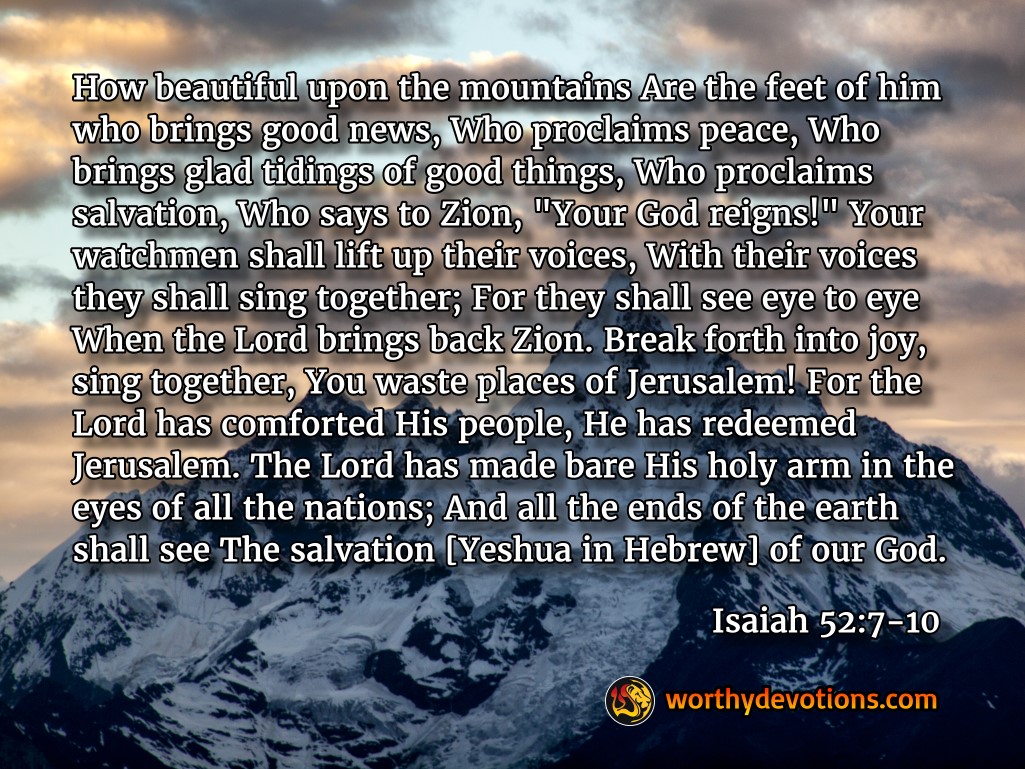
You can find the “Go Tell It on the Mountain” Bible verse in the book of Isaiah 52:7.
How does the “Go Tell It on the Mountain” Bible verse relate to the overall message of the Bible?
The “Go Tell It on the Mountain” Bible verse relates to the overall message of the Bible by emphasizing the importance of spreading the good news of Jesus Christ’s birth, life, death, and resurrection. This verse, found in Isaiah 52:7, encourages believers to proclaim the message of salvation and redemption to all nations. It highlights the mission of believers to share the transformative power of God’s love with others.