
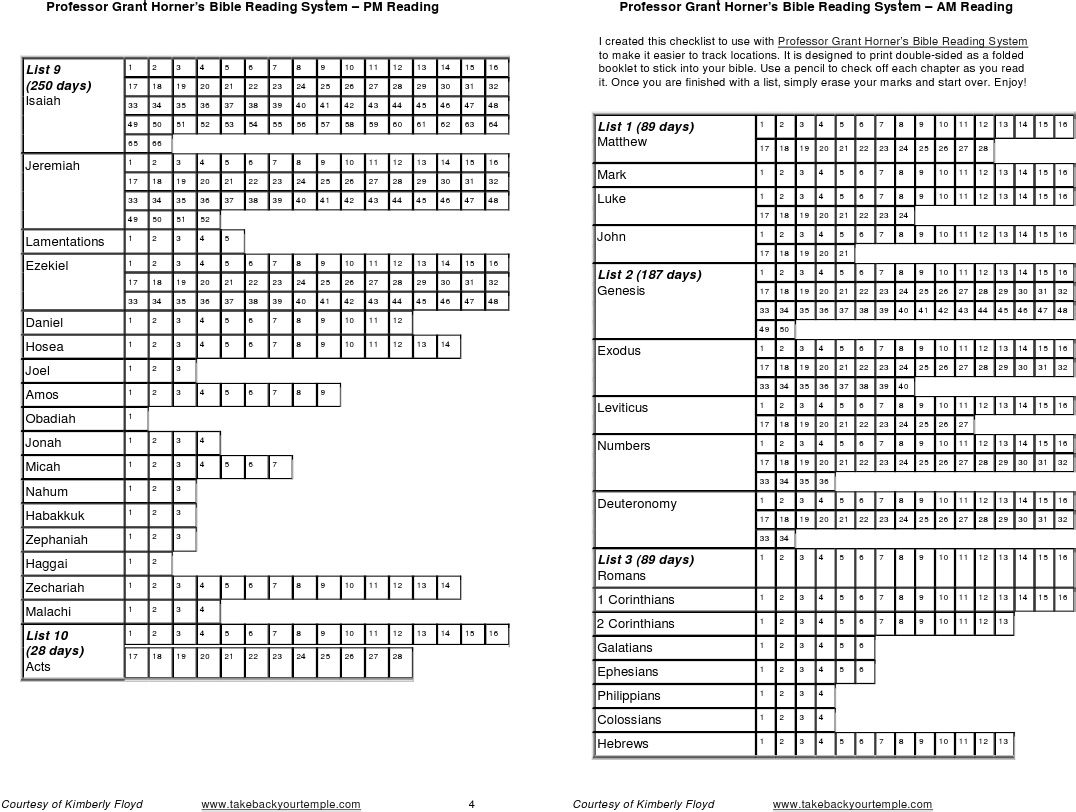
Are you looking for a Bible reading plan that will help you dive deep into the Scriptures and discover new connections between different passages? Look no further! In this blog post, we will introduce you to the highly acclaimed Professor Grant Horner Bible Reading Plan. This unique plan, designed by Professor Grant Horner, is known for its effectiveness in expanding your understanding of the Bible and fostering a love for God’s Word. Join us as we explore the benefits of this plan and how it can transform your daily Bible reading experience.
Unlocking the Depths of Scripture: Exploring the Profound Impact of Professor Grant Horner’s Bible Reading Plan
The Professor Grant Horner Bible Reading Plan is a unique and effective approach to reading the Bible. Developed by Professor Grant Horner, this plan consists of ten different lists of Bible readings that are meant to be read simultaneously. Each list contains a different genre of literature, allowing readers to engage with various aspects of Scripture simultaneously.
The ten lists included in the Professor Grant Horner Bible Reading Plan are as follows:
1. Gospels
2. Pentateuch
3. Historical books
4. Wisdom literature
5. Psalms
6. Prophets
7. Epistles (letters)
8. Acts
9. Revelation
10. Old Testament and New Testament letters
This plan encourages readers to read one chapter from each list every day. By doing so, readers will cover all ten lists within a span of approximately three months. This method provides a balanced and comprehensive approach to reading the Bible, ensuring that readers engage with a wide range of biblical themes and teachings.
The Professor Grant Horner Bible Reading Plan is designed to promote a deep understanding of Scripture by immersing oneself in its rich diversity. By reading from various genres simultaneously, readers are able to make connections and gain a deeper appreciation for the unified message of the Bible. This approach also helps to prevent monotony and boredom that may arise from reading large sections of the same genre consecutively.
One of the key benefits of this plan is the ability to see how different parts of the Bible relate to one another. The simultaneous reading of multiple genres allows readers to observe the interconnectedness of Scripture and how themes and ideas flow across different sections. This holistic approach to reading the Bible promotes a comprehensive understanding of God’s Word.
The Professor Grant Horner Bible Reading Plan is flexible and can be adjusted to suit individual preferences. Some readers may choose to read more than one chapter from each list each day, while others may opt for a slower pace. Regardless of the pace chosen, this plan provides a structured framework for consistent and intentional engagement with Scripture.
In conclusion, the Professor Grant Horner Bible Reading Plan is an innovative and effective approach to reading the Bible. By reading from ten different lists simultaneously, readers are able to engage with various genres of Scripture and gain a comprehensive understanding of God’s Word. This plan promotes a deep and meaningful connection with Scripture and encourages readers to explore the rich diversity of the Bible.
What is the reading plan for Professor Horner?
The reading plan for Professor Grant Horner, commonly known as the “Horner Bible Reading System,” is a unique and comprehensive approach to reading the Bible. The plan consists of reading ten different chapters from ten different books of the Bible every day. This results in reading approximately ten chapters from each book in a month.
The ten lists of books are as follows:
1. Gospels: Matthew, Mark, Luke, John
2. Pentateuch: Genesis, Exodus, Leviticus, Numbers, Deuteronomy
3. Historical Books: Joshua, Judges, Ruth, 1 Samuel, 2 Samuel, 1 Kings, 2 Kings, 1 Chronicles, 2 Chronicles, Ezra, Nehemiah, Esther
4. Wisdom Literature: Job, Psalms, Proverbs, Ecclesiastes, Song of Solomon
5. Major Prophets: Isaiah, Jeremiah, Lamentations, Ezekiel, Daniel
6. Minor Prophets: Hosea, Joel, Amos, Obadiah, Jonah, Micah, Nahum, Habakkuk, Zephaniah, Haggai, Zechariah, Malachi
7. Acts
8. Pauline Epistles: Romans, 1 Corinthians, 2 Corinthians, Galatians, Ephesians, Philippians, Colossians, 1 Thessalonians, 2 Thessalonians, 1 Timothy, 2 Timothy, Titus, Philemon
9. General Epistles: Hebrews, James, 1 Peter, 2 Peter, 1 John, 2 John, 3 John, Jude
10. Old Testament History: Genesis, Exodus, Leviticus, Numbers, Deuteronomy, Joshua, Judges, Ruth, 1 Samuel, 2 Samuel, 1 Kings, 2 Kings, 1 Chronicles, 2 Chronicles, Ezra, Nehemiah, Esther
Each day, you read one chapter from each list. This system allows for cross-referencing and comparison between different parts of the Bible. It is designed to provide a well-rounded understanding of Scripture and to encourage daily engagement with God’s Word.
Note: The Horner Bible Reading System is just one of many different reading plans available for studying the Bible. It is always important to find a reading plan that works best for your individual preferences and needs.
What is the Horner method of reading the Bible?
The Horner method of reading the Bible is a structured approach to daily Bible study. It involves reading one chapter from ten different books of the Bible each day. The goal of this method is to gain a broader understanding of the interconnectedness of Scripture and to see how different passages relate to each other. This method is named after Grant Horner, who popularized it.
Here is how the Horner method works:
1. Choose ten books of the Bible to read from. You can select any combination of books, such as one from each genre or a mix of Old and New Testament books.
2. Read one chapter from each book every day. Start with the first book on your list and read one chapter. Then move to the next book and read one chapter from it as well. Continue this pattern until you have read one chapter from each of the ten books.
3. Repeat the process daily. Each day, start where you left off the previous day. Over time, you will cycle through all ten books multiple times.
4. Take notes and reflect on what you read. As you go through each chapter, make note of significant verses, themes, or connections you observe. Reflect on how the passages you read relate to each other and to your own life.
5. Adjust the list of books as desired. If you want to change the selection of books, you can do so at any time. Some people modify their list based on specific topics they want to explore or areas they want to focus on.
The Horner method allows readers to engage with various parts of the Bible simultaneously. It encourages a holistic understanding of Scripture by providing exposure to different genres, themes, and perspectives. By consistently reading from multiple books, readers can develop a deeper appreciation for the richness and complexity of the Bible.
Note: This method may require a significant time commitment, as reading one chapter from ten books daily can be time-consuming. It is important to approach this method with discipline and a willingness to invest the necessary time for meaningful study.
What is the app for Professor Horner Bible reading plan?
The app for the Professor Horner Bible reading plan is called “Professor Horner’s Bible Reading System.” It is available for both iOS and Android devices. This app helps users read through the entire Bible in one year by providing a unique reading plan that involves reading ten different chapters from ten different books of the Bible each day. The app also allows users to track their progress and provides reminders for daily readings. It is a great tool for those who want to dive deep into Scripture and explore various themes and connections throughout the Bible.
What is the one year entire Bible reading plan?
One popular one-year entire Bible reading plan is the Robert Murray M’Cheyne Reading Plan. This plan was developed by a 19th-century Scottish minister named Robert Murray M’Cheyne and is widely used by Christians around the world.
The plan divides the Bible into four sections: Old Testament, New Testament, Psalms, and Gospels. Each day, you read from each section, allowing you to progress through the entire Bible in one year. The plan provides a balanced approach, ensuring that you cover a variety of genres and topics.
Here’s how the plan works:
1. Readings for weekdays: You will read two chapters from the Old Testament, one chapter from the New Testament, and one chapter from the Psalms or Gospels. By following this pattern, you will complete the Old Testament once and the New Testament and Psalms twice throughout the year.
2. Readings for Sundays: On Sundays, the plan includes shorter passages from the Psalms for reflection and meditation. This allows you to focus on these poetic and devotional writings on the day of worship.
By following this daily reading plan, you can systematically study the entire Bible in the course of a year. It provides a structured approach to ensure that you engage with different parts of Scripture regularly. Many find it helpful for personal devotion, group studies, or as a framework for preaching and teaching.
Note: There are several other one-year Bible reading plans available, and individuals may choose the one that best suits their preferences and goals.
FAQs
What is the Professor Grant Horner Bible Reading Plan?
The Professor Grant Horner Bible Reading Plan is a popular and intensive reading plan that involves reading from different sections of the Bible each day. It consists of ten lists with different books and chapters, allowing readers to cover multiple sections of the Bible simultaneously. This plan is designed to provide a diverse and comprehensive approach to reading the Bible regularly.
How long does it take to complete the Professor Grant Horner Bible Reading Plan?
The Professor Grant Horner Bible Reading Plan typically takes about 1 year to complete.
Does the Professor Grant Horner Bible Reading Plan have a specific order in which the books of the Bible should be read?
Yes, the Professor Grant Horner Bible Reading Plan does have a specific order in which the books of the Bible should be read.